Food Security in the United Kingdom

Recently, I walked across London to a conference on food and national security. It seemed to take forever - 75 minutes in reality - but I did see the yellowness of Hyde Park. I saw not one blade of green grass there, as the UK’s summer drought had taken hold. Meanwhile ,the rains had started to arrive after 6 weeks of being parched, and it was pouring. By the time I reached the meeting, I was soaked.
Half the nation had declared itself to be struggling, and hosepipe bans were widespread. Meanwhile, supermarket shelves remained full, yet food insecurity, food anxiety, food worries generally, were rising. Crops and harvests worldwide were well below normal. My country, the UK, produces a great deal of food, yet depends heavily on imports. The government acknowledges that ecosystem collapse could threaten national security, yet the response still feels fragmented.
The UK is not about to run out of food, although many families are already finding that the diet they can afford is unbalanced, and is a sea change compared with what they once had. Money is tight, and plenty of people are feeling the pinch, and beyond. The problems are multiple and include a growing exposure to climate shocks, geopolitical instability, fragile supply chains, declining natural infrastructure, expensive inputs, skills shortages and household poverty. Each problem reinforces the rest. Food security is part of national resilience and is hugely important.
A system under pressure
The UK currently produces about 60% of the food it consumes by farmgate value. This figure was over 80% in the 1980s. For reference, a farmgate price is the net amount a producer receives for their agricultural produce physically at the farm, before any costs for transport, processing, packaging, or retail markups are added to it. Clearly, the UK need not grow every banana, orange or coffee bean it consumes. Indeed, trade can strengthen resilience when one harvest fails.

However, the situation does leave the UK significantly exposed to what happens elsewhere, as it imports so much. These imports may be an essential part of the nation’s food supply, and will remain so, although relying upon overseas production carries risks. Drought, flooding, crop disease, war, energy prices, transport disruption, and poor harvests overseas can all affect the price and availability of food in the UK[i].
The Climate Change Committee noted the situation, highlighting that approximately 40% of the food consumed in the UK is imported and that fruit and vegetables have particularly high import shares. Spain alone supplied 84% of UK lettuce imports in 2023, more than 30% of imported lemons, limes and oranges, and 30% of fresh or chilled vegetables[ii]. This situation works extremely well, until it does not. In early 2023, bad weather struck Spain, Morocco and other producing regions at roughly the same time. This led British supermarkets to ration tomatoes, peppers and cucumbers, although no one starved. It was , however, a useful warning.
Savills Research now describes the UK food system as being at a crossroads. Its 2026 report notes that imports by value are nearly two and a half times exports, and highlights increasing pressure on land, profitability and supply-chain resilience[iii]. The UK Government has gone further and, in January 2026, published its assessment on global biodiversity loss, ecosystem collapse and national security. This stated that environmental degradation is a direct strategic risk to national security and economic prosperity[iv]. The country might not maintain food security if ecosystem collapse triggered geopolitical competition. That is unusually stark.
Food is national security
The connection between food and defence is simple. A substantial part of the Second World War involved keeping Britain supplied. German U-boats did not need to invade farms in Kent. They needed to sink ships carrying food, fuel and fertiliser, a principle of warfare that survives. Food can be weaponised without a tank crossing a border.

Ukraine demonstrates this point. Agricultural land, grain storage and export infrastructure have all been caught up in the conflict and targeted. A major breadbasket has been forced to protect its ability to grow and move food. NATO already treats this as a defence issue. Article 3 requires member states to maintain and develop their individual and collective capacity to resist attack. NATO’s seven baseline requirements for civil preparedness specifically include resilient food and water resources that are safe from disruption or sabotage[v]. Food security is therefore already part of the alliance’s definition of resilience.
Yet the UK system remains highly centralised in places. Processing, storage, distribution and retail have become extraordinarily efficient, which is excellent during normal times, but a system stripped of spare capacity has no reserve in the event of trouble.
Weather has arrived
Climate change is sometimes discussed as though it has not arrived and is still to come. No chance. It is here, and the world is but at the beginning.
The UK, England in particular, has moved through extremes of water supply in very short periods. Between October 2022 and March 2024, England experienced its wettest 18-month period on record. The Climate Change Committee reported that domestic food production fluctuated substantially with weather, and progress towards climate-resilient agricultural production was limited. It rated government policies and plans in this area as insufficient. Then came drought.
At the beginning of September 2026, despite the wettest week since February, national reservoir storage in England stood at only 58%. This was 19.2% below the average for the time of year. Eleven reservoirs were less than half full, ten Environment Agency areas remained in drought, and the rest were in prolonged dry weather[vi].
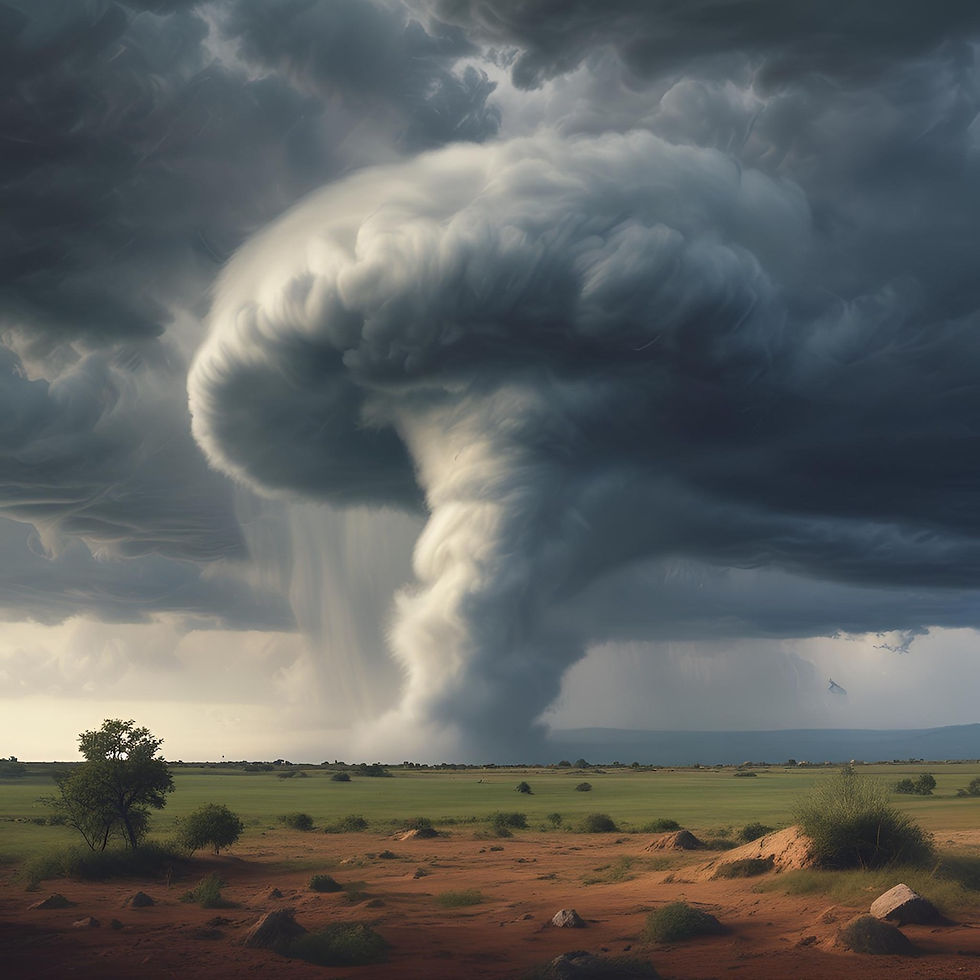
Meanwhile, an exceptional El Niño was developing. The Met Office forecast sea-surface temperature anomalies of over 3 °C in the Niño 3.4 region[vii]. This region is a key area in the central and eastern equatorial Pacific Ocean used by scientists to monitor and measure El Niño and La Niña climate patterns. The World Meteorological Organization now puts the likelihood of El Niño persisting until at least the end of February 2027 at nearly 100% and warns of increased risks of drought, flood and extreme heat in different regions[viii]. Dear me.
The land beneath us
Food security begins with land, soil and water. Although about 69% of the UK’s total land area is currently used for agriculture, the definition of so-called agricultural land is important It includes arable and horticultural crops, temporary grassland, permanent pasture, common rough grazing, and uncropped arable land. In practice, only 25% of the UK's total land area is actually classed as croppable.
Yet this land is being asked to do more than at any time in recent memory. The country needs homes, energy infrastructure, tree planting, biodiversity recovery, flood management, carbon storage, recreation, food production, and plenty more besides. These objectives can coexist, but they compete for land and money.
An independent 2025 analysis[ix] estimated that the UK had lost 771,000 hectares of agricultural land since 2000. Under its more severe scenarios, up to 23% of currently farmed land could be lost by 2050 to competing uses, contributing to a potential 32% fall in domestic food production, if productivity does not compensate for this loss. Land is finite, and so is soil.

The 2023 State of Nature report[x] by the State of Nature Partnership found that species studied across the UK had declined by 19% since 1970, while 16% of species were threatened with extinction from Great Britain. For reference, the principal abundance analysis contained 753 terrestrial and freshwater animal species and included representatives of several groups, especially birds, butterflies, moths, many mammals, and some freshwater species.
There was an even larger dataset for changes in distribution rather than abundance. This contained 4979 terrestrial and freshwater invertebrate species. The report also identified 2890 UK conservation-priority species. Of these, 228 species had sufficiently robust abundance to contribute to the UK Priority Species Indicator. Between 1970 and 2021, this indicator fell to only 37% of its 1970 baseline value.
The primary drivers of wildlife loss were intensive land management for farming, climate change, unsustainable fishing, and marine development. Pollinators had declined in distribution by an average of 18%, and predatory insects by 34%. Pollination, decent soil, nutrient cycling and water retention are agricultural infrastructure. They are essential around a farm.
The same applies to water. Even excellent soil cannot do much without rainfall or irrigation. Take the Lincolnshire farm in UK as an example. It built three reservoirs with about 180,000 cubic metres of capacity and 8.2 kilometres of underground mains. For reference, 180,000 litres is equivalent to 760,000 cups of water, or up to six large liquid tanker trunks. The farm still found some traditional crops increasingly difficult to grow under warmer, drier conditions, so took the plunge and planted olives. That may sound exotic, but welcome to climate change.
The hidden imports
British food can actually be less British than it appears. Modern agriculture depends on many things, including fertiliser, machinery, fuel, electricity, animal feed, veterinary medicines, seeds, refrigeration, packaging, transport and labour. Food production is not a single act, it is a process. A Lincolnshire wheat field may depend on imported fertiliser, diesel, machinery parts, crop protection and energy. Meanwhile, livestock may rely on imported feed, food processors require electricity and packaging, refrigerated warehouses need lots of power, and supermarkets require functioning telecommunications, in addition to logistics and payment systems.
Phosphorus is an excellent example. A peer-reviewed analysis of the UK food system found that Britain relies on imported phosphorus to meet food production demands. In 2018, the food system imported 174.6 gigagrams of phosphorus. One gigagram is 1000 tonnes. However, only 43% appeared in food and exportable commodities, while much of the remainder accumulated in soil, entered water or was lost as waste[xi]. This is both an environmental and a security problem.

Phosphorus is important because it is an essential plant nutrient, and UK agriculture cannot obtain enough of it from naturally available domestic sources to sustain present levels of food production.
Plants require phosphorus to make DNA, cell membranes and ATP, which is central to energy transfer. Farmers thus need to replace any phosphorus removed from fields when crops are harvested, or when animal products ultimately leave the farm. In practice, this is supplied through phosphate fertilisers, animal manures and recycled organic materials.
The reason for importing it is geological. The UK does not have economically significant reserves of phosphate rock suitable for modern fertiliser manufacture. Phosphate rock is mined principally in countries such as Morocco, China and several other producers. The UK therefore depends, directly or indirectly, on imported phosphate rock, phosphoric acid and manufactured phosphorus fertilisers.
It is not just phosphorus. Similar issues apply to nitrogen fertiliser, as well as to fuel and animal feed. Food security is a huge, interconnected process, not just one single act.
People are infrastructure
People matter, too. British agriculture and horticulture need skilled workers, machinery operators, agronomists, vets, engineers, seasonal pickers and food processors. A crop can be perfect in the field and still be lost if nobody can harvest, grade, chill or transport it. Grading a crop means sorting harvested produce into categories according to specified quality standards before it is sold, processed or stored. The wider agri-food sector employs about 4.1 million people in Great Britain and generated, in 2024, an estimated £162.3 billion in so-called GVA, or Gross Value Added. The agri-food sector contributes 6.2% of the total GVA for the UK and was 6.6% higher in 2024 than in 2023.

I repeatedly hear the phrase the missing middle. The UK may grow or rear something it can no longer process conveniently at home. This missing middle includes small abattoirs, canning plants, mills, cold storage and regional distribution. These are essential components of the food system. People ignore them when everything is going well but notice them the moment something goes wrong.
A more geographically dispersed system is harder to disable with one failure, whether accidental or hostile. The phrase “Hedgehog Britain” is widely used for this. The principle is to make the country sufficiently resilient, so that attacking it becomes difficult and unrewarding. No one dares try, as the response might be too painful.
The hungry country
Price is another form of food insecurity. The Food Foundation’s Broken Plate 2026 report found that households with children in the poorest fifth of the population would need to spend 85% of their disposable income on food to afford the Government-recommended healthy diet. There is little to no chance of this happening[xii]. Healthy food is nearly twice as expensive per calorie as less healthy food. This matters enormously and is rarely discussed. Food security requires people to obtain and afford a nutritionally adequate diet. When prices rise, poorer households often change what they eat. They may buy cheaper, calorie-dense foods, reduce fresh produce, shrink portions or even skip meals.
Nutrient security, or nutrition security, is a useful concept here. It means having consistent, affordable access to foods and beverages that provide all the necessary macronutrients and micronutrients to support optimal health and prevent disease. Food security is different, as it focuses primarily on having enough calories and physical access to food. Nutrient security goes a step further and emphasises the quality and nutritional value of that food[xiii].

Seafood illustrates this well. The UK produces large quantities of oily fish such as salmon, mackerel and herring, but exports much of it. Meanwhile, it imports up to 80% of the seafood consumers prefer. Researchers estimated that nutrients lost through seafood exports could account for 73% of the recommended omega-3 intake, 46% of vitamin B12, and 7% of vitamin D[xiv].
Government has (sort of) started
It would be unfair to say that Government is doing nothing, although it does appear to be rather slow.
The 2025 Good Food Cycle set ten priority outcomes for a healthier, more affordable, sustainable and resilient food system[xv]. The cycle was widely welcomed. The ten outcomes include[xvi]:
an improved food environment that supports healthier and more environmentally sustainable food sales
access for all to safe, affordable, healthy, convenient and appealing food options.
conditions for the food sector to thrive and grow sustainably, including investment in innovation and productivity, and fairer, more transparent supply chains
for the food sector to attract talent and develop a skilled workforce in every region
that the food supply should be environmentally sustainable, with high animal welfare standards, and waste reduced
that trade supports environmentally sustainable growth, upholds British standards and expands export opportunities.
resilient domestic production for a secure supply of healthier food
greater preparedness for supply chain shocks, disruption, and impacts of chronic risks
celebrated and valued UK, regional and local food cultures
for people to be more connected to their local food systems, and have the confidence, knowledge and skills to cook and eat healthily
A Food Strategy Advisory Board (FSAB) has also been created[xvii]. This brings together senior leaders from across the food system to advise on a clear vision and framework for a food strategy.
In addition to the FSAB, a Farming and Food Partnership Board[xviii] has also been established. Its role is to complement the FSAB by increasing farming profitability, improving productivity, and strengthening the contribution of domestically produced food to national security.
These are significant steps, but there is still no national resilience programme.

The Climate Change Committee concluded in 2025 that government policies and planning for food security lacked a coherent focus on climate risks. It rated plans for climate-resilient agricultural production and for minimising disruption to food and feed imports as insufficient.
Unlike England, Scotland now has a statutory food framework under the Good Food Nation legislation[xix]. This Act places duties on Scottish Ministers, local authorities and health boards to produce Good Food Nation plans. These plans set out the main outcomes to be achieved on food-related issues, the policies needed to achieve them, and the measures used to assess progress.
England’s strategy sadly remains non-statutory, with no dedicated funding settlement, and no consolidated monitoring framework. The Government’s own 2026 progress report says a monitoring and evaluation framework for the food strategy is still being developed and formal monitoring and reporting mechanisms have not yet been established[xx]. This worries me as England is manifestly on the back foot and lagging behind. One might expect differently if food were properly treated as critical national infrastructure.
What should happen now
The answer is not autarky, a word that means economic independence and complete self-sufficiency. No country in the world presently shows autarky, although North Korea is perhaps the closest to it. Nazi Germany, Francoist Spain, and Communist Albania have each tried and failed.
It seems clear that the UK should not try to grow everything it eats. Trade provides choice and resilience. Nor should nature restoration be sacrificed in a frenetic drive for increasing short-term production. Degraded soil, vanishing pollinators and exhausted water supplies are not foundations for future abundance - the goal should be resilience.
Resilience is multifaceted. It means maintaining a strong domestic production base while diversifying imports and critical inputs. It means investing in reservoirs, water efficiency, soil health, research, crop breeding, robotics, farm skills, and so much more. Farmers, who are underpaid at the best of times, should be paid for outcomes that society genuinely needs. Food production should remain profitable. Public procurement helps support resilient UK production. It has been argued that schools, hospitals and other public institutions can strengthen food-system resilience by using procurement strategically. They can still prioritise nutrition and sustainability[xxi].

Communities should also prepare. This said, the Government’s 2026 resilience survey[xxii] found that 85% of respondents had at least three days of non-perishable food at home, but only 4% had three days of bottled water based on the recommended three litres per person per day. I remember undergoing survival training in the Outer Hebrides and stocking up on whatever food I could find. I simply ignored water and shelter and should not have done so. For me, shelter should have been first, followed by water, and then food. I suppose that was the purpose of training. I started by knowing little and finished by knowing so much more. Households should do the same. Please do not forget water, as it is an essential part of life.
However important water may be, it is time for food security to adopt political ownership across the many government departments, especially in England. DEFRA cannot do this alone. Food security is a system problem that requires a system response.
The warning
I do not think the UK is about to starve. The nation has constructed a food system that is very efficient in normal conditions but is increasingly exposed to abnormal times. Climate change is no longer theoretical, it is here and now. A potentially unprecedented El Niño presently exists and is developing further, reservoirs are depleted, and international competition for food, energy and fertiliser is rapidly intensifying. Meanwhile, natural systems are deteriorating, farmers face weak margins, with half of what they earn arising from Government payouts. Millions of households struggle to afford a healthy diet. As for geopolitics, that is more than out of control. Any one of these is manageable, but several taken together are different.
The Government appears to have begun to recognise this, although the politicians I have met avoid the question. There is plenty of talk but not a huge amount of action. There is no need for panic, but the situation is urgent. I see food security like insurance - the best time to arrange it is before there is a need to claim.
***
References
[i] Morris S. England’s food warning 2026. 14 August 2026. See https://www.workersofengland.co.uk/news/englands-food-warning-2026. Accessed 9 September 2026.
[ii] Climate Change Committee. Progress in adapting to climate change: 2025 report to Parliament. See https://www.theccc.org.uk/publication/progress-in-adapting-to-climate-change-2025/. Accessed 9 September 2026.
[iii] Savills Research. Spotlight: Food Beyond Today. Rural UK 2026. London: Savills; 2026. See https://www.savills.co.uk/research_articles/229130/391482-0. Accessed 9 September 2026.
[iv] Department for Environment, Food & Rural Affairs. Nature security assessment on global biodiversity loss, ecosystem collapse and national security. See https://www.gov.uk/government/publications/nature-security-assessment-on-global-biodiversity-loss-ecosystem-collapse-and-national-security. Accessed 9 September 2026.
[v] North Atlantic Treaty Organization. Resilience, civil preparedness and Article 3. Brussels: NATO; 2025. See https://www.nato.int/en/what-we-do/deterrence-and-defence/resilience-civil-preparedness-and-article-3. Accessed 9 September 2026.
[vi] Environment Agency. Dry weather and drought in England: 28 August to 3 September 2026. See https://www.gov.uk/government/publications/dry-weather-and-drought-in-england-2026-summary-reports/dry-weather-and-drought-in-england-28-august-to-3-september-2026. Accessed 9 September 2026.
[vii] Madge G. An ‘unprecedented’ El Niño and its implications for the weather forecast. 21 August 2026. See https://www.metoffice.gov.uk/blog/2026/an-unprecedented-el-nio-and-its-implications-for-the-weather-forecast. Accessed 9 September 2026.
[viii] World Meteorological Organization. El Niño set to become very strong, raising risks of extreme weather into 2027. 3 September 2026. https://wmo.int/news/media-centre/el-nino-set-become-very-strong-raising-risks-of-extreme-weather-2027. Accessed 9 September 2026.
[ix] Wilkinson D. Farmland loss risks UK food security crisis. September 2005. See https://www.scienceforsustainableagriculture.com/derrickwilkinson5. Accessed 9 September 2025.
[x] State of Nature Partnership. State of Nature 2023. See https://stateofnature.org.uk/wp-content/uploads/2023/09/TP25999-State-of-Nature-main-report_2023_FULL-DOC-v12.pdf. Accessed 9 September 2026.
[xi] Rothwell SA, Forber KJ, Dawson CJ, Salter JL, Dils RM, Webber H, Maguire J, Doody DG, Withers PJ. A new direction for tackling phosphorus inefficiency in the UK food system. Journal of environmental management. 2022 Jul 15;314:115021.
[xii] The Food Foundation. The Broken Plate 2026. See https://foodfoundation.org.uk/publication/broken-plate-2026. Accessed 9 September 2026.
[xiii] Poppy GM, Baverstock-Poppy JJ, Baverstock J. Trade and dietary preferences can determine micronutrient security in the United Kingdom. Nature Food. 2022 Jul;3(7):512-22.
[xiv] Löfstedt A, Scheliga B, Aceves-Martins M, de Roos B. Seafood supply mapping reveals production and consumption mismatches and large dietary nutrient losses through exports in the United Kingdom. Nature Food. 2025 Mar;6(3):244-52.
[xv] DEFRA. Government launches "Good Food Cycle" to transform Britain's food system. See https://www.gov.uk/government/news/government-launches-good-food-cycle-to-transform-britains-food-system. Accessed 9 September 2026.
[xvi] NFU. ‘Good Food Cycle’ welcomed but joined-up policy needed to deliver it. 16 July 2025. See https://www.nfuonline.com/news/good-food-cycle/./ Accessed 9 September 2025.
[xvii] gov.uk. Food Strategy Advisory Board. See https://www.gov.uk/government/groups/food-strategy-advisory-board. Accessed 9 September 2026.
[xviii] gov.uk. Farming and Food Partnership Board. See https://www.gov.uk/government/groups/farming-and-food-partnership-board. Accessed 9 September 2026.
[xix] Scottish Government. Food and drink. See https://www.gov.scot/policies/food-and-drink/good-food-nation/. Accessed 9 September 2026
[xx] DEFRA. Environmental Improvement Plan: Annual Progress Report. Seehttps://assets.publishing.service.gov.uk/media/6a588b0031fb6daf314137a3/Environmental_Improvement_Plan_Annual_Progress_Report.pdf. Accessed 9 September 2026.
[xxi] Ehgartner U, Kluczkovski A, Doherty B. Public food procurement as a tool for building food system resilience in the UK. Nature Food. 2025 Feb;6(2):123-6.
[xxii] gov.uk. UK Public Survey of Risk Perception, Resilience and Preparedness 2026: Headline Findings. See https://www.gov.uk/government/statistics/uk-public-survey-of-risk-perception-resilience-and-preparedness-2026/uk-public-survey-of-risk-perception-resilience-and-preparedness-2026-headline-findings-html. Accessed 9 September 2026.


Comments