Can pine martens save the red squirrel?

The dilemma
There are grey squirrels on my land. Plenty of them, if what I see and what the trail cameras record are accurate. Now, in autumn, they seem especially busy, as they hunt for nuts and bury them for safekeeping, Or, so they think, as grey squirrels can sometimes lose some of what they hide. Indeed, there are folk who say that grey squirrels can damage trees - that is true. Yet, perhaps losing nuts is one way of planting them. Scatter-hoarding has been shown to help tree dispersal and establishment.[i] The squirrels seem to focus on the valley. The higher I go up the wooded fell, the less common is the squirrel.
On my land, there are no red squirrels that I have yet spotted, although a couple have been seen nearby. I have seen plenty in other places - not always in the Lake District. Mind you, when it comes to prizes for being secret, the red squirrel is a winner. On several occasions I have stood one side of a tree trunk while a red squirrel has clung to the opposite side in complete silence. I have only caught a glimpse of it by being equally silent myself.
The lack of visible red squirrels creates a problem. It appears that everyone blames the greys. I meet many of those committed to red squirrel encouragement and conservation, and their argument is the same. The greys must go as they are a recognised hazard to the reds. If they do not kill them, they transmit squirrelpox (SQPV) and compete for the same foods. Whatever the reason, I am told, the grey squirrels must go. Trapping and culling are the only answer.
Yet is that true?
How we got here
I understand the argument. Grey squirrels (Sciurus carolinensis) are not native to Britain and were deliberately imported from North America by wealthy Victorians, largely as ornamental animals for country estates and parks. It was not a single accidental introduction. An accepted first verifiable introduction was in 1876 by a Cheshire landowner and banker, Thomas Brocklehurst. He brought a pair of eastern grey squirrels from America and released them at Henbury Park, near Macclesfield.[ii] Between 1902 and 1929, a wave of introductions took place in many areas. The grey squirrel stock for most of these introductions came either directly from the United States or from Woburn[iii], as by then the UK had plenty of greys to find.
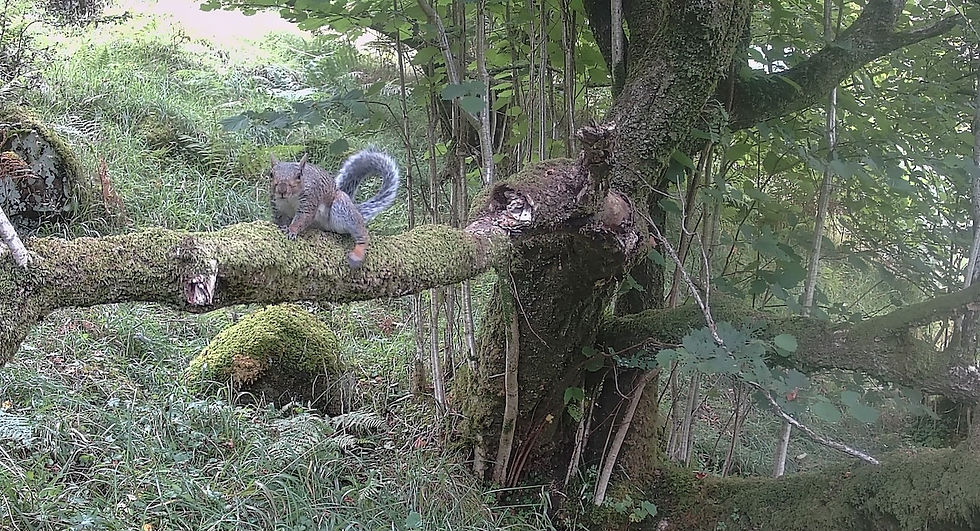
The grey squirrel competes with the UK’s native red squirrel (Sciurus vulgaris) in many ways and can damage woodland by stripping bark from trees. Its arrival in Britain has been followed by an extraordinary contraction in the range of the red squirrel. Ironically, red squirrels were once regarded as serious forestry pests in Britain and were deliberately killed in large numbers. Like greys, red squirrels damage trees too, by bark stripping and feeding on shoots and buds. As commercial forestry expanded during the nineteenth and early twentieth centuries, foresters and estate owners sometimes regarded abundant reds in the same way mankind now regards greys. The Animal and Plant Health Agency (APHA) noted that red squirrels were under heavy hunting pressure until the early twentieth century.[iv]
A clear example was the Highland Squirrel Club, which was founded in Scotland in 1903, specifically to reduce red squirrel damage to forestry. Its member estates paid bounties for red-squirrel tails. By the time the club ceased operating in 1946, it had recorded 102,900 red squirrels killed and had paid £1504 in bounties, a sum that is worth nearly £82,000 today.
My land is increasingly becoming a place for research, education and nature recovery. Killing one species to encourage another may sometimes be necessary, but I do not want lethal control to become the automatic response whenever nature fails to arrange itself according to mankind’s preferred plan. Especially when a century ago society was killing the same animal as it is presently trying to promote.
A new possibility
There may be another possibility. The pine marten (Martes martes) is returning to Cumbria. The first 13 adults were translocated into Grizedale Forest and the Rusland Valley in September 2024. The intention was not for the pine martens to remain obediently where they were placed. The hope was they would breed and disperse across a landscape from which the species had been largely eliminated.[v] In 1950, one year before the Lake District National Park was founded, the native red squirrel was reported as being plentiful in Cumberland and Westmorland.[vi] For the pine martens, the story was different. They had been widespread throughout Cumbria until the late nineteenth century, but persecution, particularly predator control associated with game shooting, combined with woodland loss, led to a catastrophic decline.

The translocated pine martens are happily already moving. It did not take them long, and it has made me think. Instead of killing the grey squirrels on my land, which many would wish me to do, might I encourage pine martens and allow nature to do the rest?
An American arrival
The grey squirrel, imported into the UK by man, is now routinely described as an invasive species, which it undoubtedly is. The squirrel itself was simply placed in an ecosystem in which it found itself remarkably successful.
From the scattered introductions, the grey-squirrel population expanded, especially through England and Wales. Separate populations eventually joined and the species spread northwards. In many of the areas it occupied, the native red squirrel subsequently disappeared. The greys take the blame for this. That may sound sensible but is simplistic. It may partly be true, but that is all.
Reds in trouble
In the early days, before its American cousin appeared, the red squirrel did not inhabit an ecologically perfect Victorian Britain. British woodland had been cleared, fragmented, grazed and managed for centuries. Red squirrel populations fluctuated, sometimes considerably. They were themselves regarded as forestry pests and were killed in substantial numbers. Weather, food supply, habitat change and disease affected them.
Although SQPV is said to be the main issue now affecting red squirrels, and there is no doubt it is serious, there were many diseases before SQPV that drastically reduced the red squirrel population. Coccidiosis was one. This is an intestinal infection caused by protozoan parasites, potentially producing diarrhoea, dehydration and death. Young and stressed animals are especially affected. It is said that coccidiosis contributed to a dramatic decline in British red squirrels between roughly 1900 and 1925. It would consequently be wrong to attribute the entire historical decline of the British red squirrel to grey squirrels. Coccidiosis has played a major part as well.
The red squirrel is also not without other problems. For example, apart from armadillos in the Americas, leprosy infections are considered almost exclusively restricted to humans. Researchers examined warty growths on the faces and extremities of red squirrels in the British Isles and found that two species of leprosy-causing organisms were to blame, Mycobacterium leprae and Mycobacterium lepromatosis.[vii] It is quite possible that the red squirrel was a mediaeval-period leprosy host, a suggestion that has already been made by others.[viii]

SQPV, and the chaos it causes, did not feature until 1980.[ix] The red squirrel was causing waves of mischief until then.There is certainly greater evidence of the grey-red mismatch when expanding grey squirrel populations encounter reds. There the case becomes clearer as the two species use many of the same foods, but they do not use them equally. Grey squirrels have a particular advantage in broadleaved woodland and are better able than reds to exploit acorns, as they can apparently cope with the compounds contained within them.[x] That matters enormously in oak woodland, and I have plenty of oaks on my land.
Grey squirrels not only compete for the same foods as reds but can alter a red squirrel’s size and weight. For example, female red squirrels have been shown to be lighter, with poorer summer breeding as the grey squirrel density rises.[xi] If fewer females breed successfully, and fewer young animals enter the population, the arithmetic eventually takes care of the rest.
A lethal passenger
Grey squirrels can carry SQPV with little obvious effect upon themselves, but the red squirrel is far less fortunate. Affected reds can develop severe lesions around the eyes, mouth and paws. Feeding becomes difficult, vision may be compromised, and the death rate can be over 90%.[xii] There is a near-zero mortality for grey squirrels, so the epidemiological consequences can be dramatic. SQPV can accelerate the replacement of red squirrels by greys far beyond what would be expected from food competition alone.[xiii]
Researchers studied changes in red and grey squirrel distribution in Cumbria between 1993 and 2003. They calculated that the red squirrel decline was 17-25 times faster when SQPV infection was present in an invading grey squirrel population than when the virus was absent.[xiv] Although approximately up to 80% of grey squirrels in a British population may have antibodies to SQPV, this figure is heavily dependent on location. Importantly, having antibodies does not mean that a grey squirrel is infectious. It is not presently known what percentage of grey squirrels are infectious with SQPV at any one time. This said, irrespective of the SQPV status, one can be reasonably confident that grey squirrels are an important cause of the modern replacement of reds.
It is dangerous to turn a complicated ecological history into a morality play. The grey squirrel did not decide to invade Britain - mankind introduced it. It is now doing what successful animals do.
The predator returns
Then there is the pine marten.
Pine martens were once widely distributed across Britain. At one time, they were thought to be Britain's second most common carnivorous mammal, second only to the weasel. This was during the Mesolithic period, up to 10,000 years ago, when much of Britain was covered in woodland. The Mesolithic Age, or Middle Stone Age, is the transitional period of human history between the Palaeolithic (Old Stone Age) and the Neolithic (New Stone Age) periods. Mankind has been busily felling trees throughout this period.
Centuries of woodland loss and persecution reduced the pine marten population drastically, especially in England and Wales. Their modern return restores an ecological relationship that has largely been absent from Britain for a very long time.
The first compelling clues about squirrels came from Ireland. As pine martens recovered in parts of the Irish Midlands, grey squirrel populations began disappearing from some areas and red squirrels returned. This was clearly documented in 2014.[xv] Four years later, a similar relationship was reported from Scotland. A greater number of pine martens was associated with reduced grey squirrel numbers, while the number of red squirrels rose.[xvi]
Why greys suffer
So why should a predator capable of eating both squirrels apparently favour one of them? Part of the answer may lie in evolutionary history. Red squirrels and pine martens have lived together for thousands of years. Grey squirrels evolved in North America without European pine martens. When researchers exposed the two species to pine marten scent, reds became more cautious and reduced their use of affected feeding sites, while greys showed a weaker response.[xvii]

Diet studies were also helpful. Pine martens certainly eat both red and grey squirrels, but grey squirrels appeared disproportionately frequently in the diet when both species were present.[xviii] These studies strongly suggest that the return of one native species, the pine marten, alters the competitive balance between two others. In this case, red and grey squirrels.
The awkward evidence
Pine martens do not arrive and immediately empty a woodland of grey squirrels. They do so gradually. One study followed grey squirrels after pine martens had been translocated into Wales and found that the squirrels changed their behaviour. Those exposed to greater pine marten activity travelled farther and altered their use of the area. However, the researchers did not identify a reduction in grey squirrel survival during the study.[xix] Unfortunately, this study was relatively short and ecological change requires time. It is not the same as placing a mousetrap in a loft space or garage, where the result is instant.
The pine martens themselves may also refuse to cooperate. Indeed, they often do. Animals followed after translocation in Wales moved substantial distances before settling.[xx] A marten released into one woodland can establish its home range several kilometres away. A pine marten moves at approximately 3.5km/hr, roughly human walking pace, and can cover a territory of up to 30 square kilometres. The average settlement distance from a release site is up to 14 kilometres but on rare occasions this can be as much as 100 kilometres.[xxi] Pine martens do move, and sometimes a very long way.
For example, 13 healthy adult pine martens were translocated from Scotland to the South Lakes in the autumn of 2024. This population had grown to 30 individuals by late 2025. and One seriously active female made it all the way from the South Lakes to the North Lakes in a matter of days. The straight-line distance between Grizedale Forest in the South Lakes, where the animals were released, and Penrith in the North Lakes, is 40 kilometres.
Although I would love it if pine martens made their home on my land, I do not actually need that. All I wish is to ensure they pass through my land as they travel. That is a clear possibility. Draw a straight line between Grizedale Forest and Penrith and - guess what - it goes right through my land.
Reds are prey too
Pine martens also eat red squirrels, not just greys. However, reds generally coexist with them better than the greys. Habitat, however, changes this relationship.
To demonstrate this, researchers analysed several years of data from Northern Ireland. Pine martens were associated with fewer grey squirrels across different habitats. The response of reds was more complicated. Pine martens had a positive influence on red squirrel occurrence, especially in native broadleaf woodlands. However, in areas dominated by non-native conifer plantations, the pine marten reduced red squirrel occurrence.[xxii]
Woodland matters
A squirrel, be it red or grey, does not live in a theoretical habitat labelled simply “woodland”. Tree species matter, tree age matters, food production matters, as does connectivity.
One group of researchers radio-tracked red and grey squirrels in a Scottish forest, where the two species had coexisted for decades. Reds selected areas containing Norway spruce, while greys favoured mixed woodland and riparian broadleaves. The authors concluded that differences in habitat use may explain why reds can persist alongside greys in some forests for longer than in others.[xxiii]

There is also research on acorns, as broadleaved woodland containing large-seeded species such as the oak can be an extremely productive habitat for grey squirrels. Meanwhile, conifer-rich habitats can give reds a relative advantage, although red squirrels themselves are by no means confined to conifers. They are well able to thrive in broadleaved woodland where food is plentiful and greys are absent.
Red squirrels and grey squirrels can often show an overlap in their choice of habitat, and in forests where both species are present the number of red squirrels declines rapidly as they are outcompeted by the greys. This can sadly lead to a complete loss of red squirrels in that region. However, there are some important differences in the type of tree used by each species.
Grey squirrels tend to rely on trees with large seeds that have high calorific values, such as oaks. Meanwhile red squirrels can feed on smaller seeds with lower calorific values. For example, the seeds of coniferous trees such as pines, or broad-leaved trees such as alder. This is the reason that most UK red squirrel populations at present are restricted to coniferous woodlands, where grey squirrels have struggled.
In the regions where red squirrels can still be found but grey squirrels are absent, careful management of the woodland habitat can help red squirrels survive. The management plans revolve around two key principles. First, make the habitat as attractive as possible for red squirrels, and second, unattractive to grey squirrels.
Food all year
There are several options available to make woodland more attractive to red squirrels, but it ultimately comes down to ensuring there is a healthy food supply throughout the year. Red squirrels primarily feed on seeds and nuts, but supplement their diet with fruit, plant shoots and fungi when their preferred food is less available. However, conifers do not always produce seeds annually, and many species will not start producing seeds until they have aged significantly - up to 20 years for some trees.

To ensure there are always seeds available for red squirrels, woodland can be managed to be certain there is a healthy variation in the age of the trees present, as well as providing a spectrum of tree species on which the red squirrels can feed. They prefer conifers such as larch and Norway spruce, but it is a balancing act between providing red squirrels with their ideal food choice and not attracting grey squirrels into the area.
The location and timing of any forestry work is also important in optimising woodland management for red squirrels, especially while young squirrels are still present in their nests (dreys). In addition, as red squirrels prefer to have a continuous canopy to move through, it is important that solid corridors remain between seeding trees.
As for making woodland unattractive to grey squirrels, this relies on producing islands of woodland that can only support red squirrels. A barrier between that woodland and any surrounding grey-squirrel-friendly areas is also important These barriers can include coniferous trees, arable land or moorland, and are designed to discourage grey squirrels from entering the red squirrel habitat.[xxiv]
Then there are the sheep.
The missing saplings
One thing I find striking about my land is the shortage of naturally regenerating young trees. In Bowness, where I live, there are saplings almost everywhere. But on my Ambleside land there are barely any. New trees appear to grow through epicormic growth. Saplings are few.
An interesting experiment was carried out in upland broadleaved Cumbrian woodland. The researchers deliberately varied both the season and intensity of sheep grazing. They then looked at natural tree regeneration and browsing damage.[xxv]The findings were clear. In brief, sapling numbers increased as grazing decreased.
A further study examined seven regenerating upland birch woods in Scotland where sheep, cattle and wild herbivores were present. Tree regeneration could occur in grazed woodland, but browsing intensity depended partly upon the amount of good-quality alternative forage available. Saplings surrounded by taller vegetation and larger saplings were less heavily browsed.[xxvi] A sapling takes its chances when there is livestock around.
What sheep change
My suspicion about the lack of saplings on my land is reasonable, but it is not yet proof. Other herbivores are present. Roe deer browse trees, voles and other small mammals can damage seedlings, while drought can kill them. Dense grass, bracken and other vegetation can prevent successful establishment. Seed availability varies tremendously year-to-year. A young tree may germinate but never survive sufficiently long for me to notice it. All these effects can operate simultaneously.
Nevertheless, decades of British research have established that large herbivores can strongly influence whether upland woodland regenerates.[xxvii] Some grazing may be good, but too much grazing is bad. Sheep grazing does not merely affect trees, it changes the vegetation around them. Certainly, on my land, as I have endeavoured to reduce the number of sheep grazing there, so the flowers have responded. I now see flowers that I thought had disappeared.

I must be careful, of course, as it does not prove that reduced sheep grazing caused the change. It just looks that way. However, weather may also be responsible, and the change in flowers may partly be down to that. Yet it does appear that the grazing of sheep can influence the vegetation seen. There has been plenty of research to support this. Changes may not be instant, but they do occur.[xxviii],[xxix]
Rest periods can allow plants to flower and set seed, while the timing and intensity of sheep grazing is important.[xxx]
Grazing and squirrels
It might be said that fewer sheep will produce more red squirrels, yet there is no research I can find that currently allows me to say that.
Reduced grazing certainly allows more young trees and shrubs to survive. Over decades this will increase woodland cover, structural complexity and eventually the production of seeds, cones and nuts. These changes can alter the squirrel habitat. I commonly find tracking evidence that sheep have used the shelter of my many hazel trees, to keep away from the rain and wind. There is plenty of both in Cumbria.
The beneficiary is not necessarily the red squirrel. Greys also use hazel as well as exploiting oak. More broadleaved woodland can therefore improve the habitat for the very animal I am trying to discourage. Forestry guidance for red squirrel conservation recommends paying attention not simply to the quantity of woodland but to its species composition and age structure.[xxxi]
There is an interesting, subtler possibility. Reduced excessive grazing may create a more structurally diverse woodland. This can improve connectivity and habitat for both pine martens as well as squirrels. If pine martens then suppress greys sufficiently, reds may be better able to exploit the recovering woodland. It thus looks as if sheep grazing needs to be kept down. I must have a word with that farmer...
The case against culling
You would have thought I would support culling, especially as I was once in the military. Yet somehow, I find it hard to support anything being killed on my land. Especially for a manmade problem. Greys are only bad news because we put them there. Go back a hundred years and we were doing the same to red squirrels as we are doing to greys now. So, I remain reluctant.

I understand why others do it, although hope they have thought it through. There is no doubt that many have not. My concern is that culling is the thin end of a wedge, as once it starts, it can only continue. What is more, it seems strange to cull an animal but not do anything to its ecosystem. Sooner or later the animal will return and culling starts again.
There is already evidence that pine martens are spreading through the wider landscape. Meanwhile, red squirrels have reportedly been seen barely one kilometre away, and the habitat itself is already changing because grazing pressure has fallen. I can see that happening around me.
To remove the greys immediately would alter one of the most interesting ecological relationships I have the opportunity to observe. Anyway, how much damage are the greys truly causing? Ring barking is said to be the problem, yet I am rarely seeing that on my land.
The numbers are astonishing, too. It is not just a matter of turning up with some squirrel traps and the job is done. Researchers in Cumbria modelled grey squirrels, red squirrels and SQPV, and found that more than 60% of grey squirrels had to be removed each year to prevent grey expansion and the associated decline of reds. Crucially, the model assumed that this removal occurred throughout every occupied habitat, with equal effectiveness, year after year, over approximately a decade. It was not a finding that removing 60% from one property would give lasting control.
Even a thorough local cull may be either short-lived or unsuccessful. Researchers studied two Irish woodlands, monitoring squirrels individually and conducting five intensive culls. They found that populations recovered within ten weeks in four of the five culls, replacements tended to arrive from outside the woodland, and an unsuccessful autumn cull was followed by recovery to the previous population level within three weeks.[xxxii]
Restoring balance
Encouraging pine martens does not mean feeding them or attempting to release animals myself. What I can provide is suitable habitat. Connected woodland matters, as do mature trees, cavities and secure resting places. Structural diversity is important, as is woodland that can regenerate itself. I have plenty. Removing or lowering grazing pressure allows suppressed plants, particularly in the shrub and herbaceous layers, to grow, thereby increasing structural complexity.
Lower grazing pressure removes the constant browsing of young shoots, allowing tree seedlings and saplings to establish themselves and bridge the gap into the canopy. Stopping grazing often increases the depth of leaf litter and alters soil properties, which favours tall grasses or dwarf-shrubs. While reducing heavy overgrazing helps structure, a total and permanent lack of grazing can sometimes let aggressive, dominant plants or shade-tolerant species outcompete finer flora. This potentially reduces the overall ground-layer species richness or causes scrub uniformity in certain habitats.[xxxiii]
Letting nature work
I appear surrounded by those who wish to cull the grey squirrel. Much as, I suppose, 100 years ago I would have been surrounded by folk wishing to cull the red squirrel. To me, culling only makes sense if the greys can be shown to be damaging the woodland, and suppressing or extinguishing the reds. I have plenty of trees, and yet I can find little damage caused by grey squirrels. However, I am enthusiastic about the pine marten.

Of course, pine martens may never fully eliminate grey squirrels. They may suppress them, change the grey’s behaviour, or push it towards gardens, villages and towns. However, pine martens may alter the balance sufficiently for red squirrels to return. For me, that would be sufficient. There is something attractive about allowing a missing native predator to resume an ecological role rather than expecting every problem to be solved by a trap, cudgel, or gun.
Lethal control should not be adopted simply because it is what everyone does. My land is already changing, thanks to reduced livestock grazing. More flowers, perhaps more young trees are appearing, almost as I blink. Something is happening.
For the moment, I would rather see what happens. Fingers crossed I will not be disappointed. My land waits for the pine marten to pass through. Who knows, the animal might even stop on my land and make a home. Anything is possible.
***
Hashtags
Keywords
Pine martens; red squirrels; grey squirrels; woodland regeneration; conservation ecology
References
[i] Steele MA, Manierre S, Genna T, Contreras TA, Smallwood PD, Pereira ME. The innate basis of food-hoarding decisions in grey squirrels: evidence for behavioural adaptations to the oaks. Animal Behaviour. 2006 Jan 1;71(1):155-60.
[ii] Middleton AD. The ecology of the American grey squirrel (Sciurus carolinensis Gmelin) in the British Isles. Proc Zool Soc Lond. 1930;1930:809-843.
[iii] Wildlife Online. What’s the story behind the Grey squirrel in Britain? See https://www.wildlifeonline.me.uk/questions/answer/whats-the-story-behind-the-grey-squirrel-in-britain. Accessed 3 October 2026.
[iv] Vial F. Plight of the red squirrel. 9 October 2018. See https://aphascience.blog.gov.uk/2018/10/09/red-squirrel/. Accessed 3 October 2026.
[v] University of Cumbria. South Cumbria Pine Marten Recovery Project. See https://www.cumbria.ac.uk/research/centres/centre-for-national-parks-and-protected-areas/conservation--ecology/themes/south-cumbria-pine-marten-recovery-project.html#. Accessed 3 October 2026.
[vi] Harrison J. Country diary 1950: The relentless march of the grey squirrel. 24 March 2025. See https://www.theguardian.com/environment/2025/mar/24/country-diary-1950-the-relentless-march-of-the-grey-squirrel. Accessed 3 October 2026.
[vii] Avanzi C, Del-Pozo J, Benjak A, Stevenson K, Simpson VR, Busso P, McLuckie J, Loiseau C, Lawton C, Schoening J, Shaw DJ. Red squirrels in the British Isles are infected with leprosy bacilli. Science. 2016 Nov 11;354(6313):744-7.
[viii] Urban C, Blom AA, Avanzi C, Walker-Meikle K, Warren AK, White-Iribhogbe K, Turle R, Marter P, Dawson-Hobbis H, Roffey S, Inskip SA. Ancient Mycobacterium leprae genome reveals medieval English red squirrels as animal leprosy host. Current Biology. 2024 May 20;34(10):2221-30.
[ix] Carroll B, Russell P, Gurnell J, Nettleton P, Sainsbury AW. Epidemics of squirrelpox virus disease in red squirrels (Sciurus vulgaris): temporal and serological findings. Epidemiology & Infection. 2009 Feb;137(2):257-65.
[x] Kenward RE, Holm JL. On the replacement of the red squirrel in Britain. A phytotoxic explanation. Proceedings: Biological Sciences. 1993 Mar 22:187-94.
[xi] Gurnell J, Wauters LA, Lurz PW, Tosi G. Alien species and interspecific competition: effects of introduced eastern grey squirrels on red squirrel population dynamics. Journal of Animal Ecology. 2004 Jan;73(1):26-35.
[xii] Chantrey J, Dale TD, Read JM, White S, Whitfield F, Jones D, McInnes CJ, Begon M. European red squirrel population dynamics driven by squirrelpox at a gray squirrel invasion interface. Ecology and Evolution. 2014 Oct;4(19):3788-99.
[xiii] Tompkins DM, White AR, Boots M. Ecological replacement of native red squirrels by invasive greys driven by disease. Ecology Letters. 2003 Mar;6(3):189-96.
[xiv] Rushton SP, Lurz PW, Gurnell J, Nettleton P, Bruemmer C, Shirley MD, Sainsbury A. Disease threats posed by alien species: the role of a poxvirus in the decline of the native red squirrel in Britain. Epidemiology & Infection. 2006 Jun;134(3):521-33.
[xv] Sheehy E, Lawton C. Population crash in an invasive species following the recovery of a native predator: the case of the American grey squirrel and the European pine marten in Ireland. Biodiversity and conservation. 2014 Mar;23(3):753-74.
[xvi] Sheehy E, Sutherland C, O'Reilly C, Lambin X. The enemy of my enemy is my friend: native pine marten recovery reverses the decline of the red squirrel by suppressing grey squirrel populations. Proceedings of the Royal Society B: Biological Sciences. 2018 Mar 7;285(1874):20172603.
[xvii] Twining JP, Ian Montgomery W, Price L, Kunc HP, Tosh DG. Native and invasive squirrels show different behavioural responses to scent of a shared native predator. Royal Society Open Science. 2020 Feb 1;7(2).
[xviii] Twining JP, Montgomery WI, Tosh DG. The dynamics of pine marten predation on red and grey squirrels. Mammalian Biology. 2020 Apr 28.
[xix] McNicol CM, Bavin D, Bearhop S, Ferryman M, Gill R, Goodwin CE, MacPherson J, Silk MJ, McDonald RA. Translocated native pine martens Martes martes alter short‐term space use by invasive non‐native grey squirrels Sciurus carolinensis. Journal of Applied Ecology. 2020 May;57(5):903-13.
[xx] McNicol CM, Bavin D, Bearhop S, Bridges J, Croose E, Gill R, Goodwin CE, Lewis J, MacPherson J, Padfield D, Schofield H. Postrelease movement and habitat selection of translocated pine martens Martes martes. Ecology and Evolution. 2020 Jun;10(11):5106-18.
[xxi] Devon Wildlife Trust. Bringing back pine martens. See https://www.devonwildlifetrust.org/two-moors-pine-marten-project-faqs. Accessed 11 October 2026
[xxii] Twining JP, Sutherland C, Reid N, Tosh DG. Habitat mediates coevolved but not novel species interactions. Proceedings of the Royal Society B: Biological Sciences. 2022 Jan 12;289(1966):20212338.
[xxiii] Bryce J, Johnson PJ, Macdonald DW. Can niche use in red and grey squirrels offer clues for their apparent coexistence? Journal of Applied Ecology. 2002 Dec;39(6):875-87
[xxiv] The Wildlife Trusts. Habitat management. See https://www.wildlifetrusts.org/habitat-management-red-squirrels. Accessed 11 October 2026
[xxv] Hester AJ, Mitchell FJ, Kirby KJ. Effects of season and intensity of sheep grazing on tree regeneration in a British upland woodland. Forest Ecology and Management. 1996 Nov 1;88(1-2):99-106.
[xxvi] Pollock ML, Milner JM, Waterhouse A, Holland JP, Legg CJ. Impacts of livestock in regenerating upland birch woodlands in Scotland. Biological Conservation. 2005 Jun 1;123(4):443-52.
[xxvii] Mitchell FJ, Kirby KJ. The impact of large herbivores on the conservation of semi-natural woods in the British uplands. Forestry: An International Journal of Forest Research. 1990 Jan 1;63(4):333-53.
[xxviii] Alday J, O'Reilly J, Rose RJ, Marrs RH. Effects of long-term removal of sheep-grazing in a series of British upland plant communities: Insights from plant species composition and traits. Science of the Total Environment. 2021 Mar 10;759:143508.
[xxix] Kirby KJ. The impact of deer on the ground flora of British broadleaved woodland. Forestry. 2001 Jan 1;74(3):219-29.
[xxx] Scohier A, Dumont B. How do sheep affect plant communities and arthropod populations in temperate grasslands?. Animal. 2012 Jan 1;6(7):1129-38.
[xxxi] Forestry Commission. Red squirrels and forestry operations in England. See https://www.gov.uk/government/publications/red-squirrels-and-forestry-operations-in-england-operations-note-65/red-squirrels-and-forestry-operations-in-england-operations-note-65. Accessed 11 October 2026.
[xxxii] Lawton C, Rochford J. The recovery of grey squirrel (Sciurus carolinensis) populations after intensive control programmes. In Biology and environment: proceedings of the Royal Irish Academy 2007 (Vol. 107, No. 1, pp. 19-29). Royal Irish Academy.
[xxxiii] Woodland Trust. Woodland Conservation News. Autumn 2012. See https://www.woodlandtrust.org.uk/media/1824/wood-wise-woodland-conservation-grazing.pdf. Accessed 12 October 2026.


Comments