Ptaquiloside and the Hills Beneath Our Feet

A Plant on a Mission
It was not long ago that I wrote about bracken (May 2025), so the last thing I wished was to write about it again. Yet here I am. The problem is that on my land, the plant surrounds me - bracken this and bracken that. Bracken (Pteridium aquilinum) is clearly of interest, certainly if I look at the number of folk who have read what I wrote, so when I established that it may be quietly and imperceptibly poisoning us, and that few if any authorities are monitoring it, I felt it was time to write again, but this time focus on ptaquiloside in bracken and upland water safety. Most people with whom I talk consider I am worrying about nothing. Anyway, here goes. This time, my focus is not about the plant itself, but its quiet chemistry of harm. Bracken may appear beautiful - only the other day, someone, most probably from either the local Council or the Lake District National Park Authority, said those very words.
“I like bracken”, he said.
All I could do was roll my eyes. I do not think he saw.
Some plants announce themselves loudly. Nettles sting. Hemlock carries a reputation. Foxglove wears its danger openly in colour. Bracken does none of this. It simply appears, year after year, folding and unfolding itself across hillsides, woodland margins, old quarries, and abandoned pasture. Dig a hole for a new tree, and bracken rhizomes appear instantly. Bracken is a plant on a mission.

Walking through upland Britain in summer, bracken becomes almost unavoidable. It lines paths, creeps into fields, and rises chest-high on slopes where sheep once grazed. In autumn, it turns bronze and brittle, its dead fronds rattling in the wind, a sound that many people associate with wildness itself.
Bracken feels ancient and safe. It is native, familiar, and entirely at home in the landscape. And yet bracken is not passive, however it might appear. Hidden within its tissues is a potent chemistry that has shaped veterinary practice, influenced ecological thinking, and raised awkward questions for public health. Questions, as best I can tell, that are frequently ignored. The doubt centres on a compound with an unfamiliar name and an unsettling set of properties.
Its name? Ptaquiloside, or PTA.
This is a story about what happens when an ancient plant, evolved for survival in a very different world, meets modern land use, altered grazing patterns, and changing hydrology. Only someone entirely detached from reality would say that the world is unchanged, the climate in particular.
Climate change, with warmer temperatures and longer growing seasons, generally favours bracken, increases its productivity, and allows it to grow taller and spread into new areas. Bracken will often outcompete native heather (Calluna vulgaris) and impact biodiversity, carbon storage, and create increased wildfire risks. Perhaps, just perhaps in the future, extreme drought could eventually limit it. Mind you, there is little sign of drought in my Lake District. Most of the time on my land, I return home with soggy feet.
Inside Bracken
Ptaquiloside is a natural chemical produced by bracken as part of its defence system. Its name is derived from the scientific name, Pteridium aquilinum, of the bracken fern species in which the toxin is primarily found. It combines parts of the fern's scientific name with a chemical suffix.
First, there is the genus name, Pteridium, which comes from the Greek word pteris, meaning "fern" or "wing". Second, aquilinum is Latin for "eagle-like" and refers to the image of a double-headed eagle or oak tree that can be seen in a transverse section of the fern's stem (stipe).
Third, there is the suffix "-oside". This is chemical nomenclature indicating that the compound is a glycoside. Being a glycoside means that it contains a sugar component (glucose) attached to a non-sugar component.

Thanks to the work of chemists, the structure of ptaquiloside has been determined, and it appears to break down into a highly reactive form that readily attacks biological molecules.[i] This reactivity is central to the scientific worry, and certainly mine, as when ptaquiloside is activated in the body, it can damage DNA.[ii]Cancer is fundamentally a disease of damaged DNA. Such damage is not unusual. Cells repair it constantly, but repeated damage increases the chance of errors in repair. These errors can, over time, lead to cancer. Cancer is not just one DNA error, it is a cascade of errors that cripple a cell's ability to self-regulate. This allows mutated cells to become cancerous.
This matters because bracken is not a rare plant, and ptaquiloside is not a trace curiosity. It is a major constituent of bracken’s chemical armoury. A classic review in the cancer literature argued that ptaquiloside is the key carcinogenic principle of bracken and that related illudane glycosides may also contribute to this carcinogenicity.[iii]
Illudane glycosides are a group of toxic, biologically active terpenoids, primarily found in bracken ferns. Terpenoids, sometimes known as isoprenoids, are a massive group of natural organic compounds that give plants their distinctive scents, flavours (e.g., cinnamon, ginger), colours (e.g., sunflower yellow, tomato red), and medicinal properties (e.g., menthol, cannabinoids). They are crucial for defence, signalling, and structure in organisms, and have significant roles in pharmacology, aromatherapy, and natural products.
Evidence from the Fields
The link between bracken and disease was not discovered in a laboratory. It was noticed in fields. For well over a century, farmers in bracken-rich regions observed that cattle grazing their lands were more likely to develop chronic bleeding from the urinary tract and tumours of the bladder, a condition now known as bovine enzootic haematuria (BEH). Veterinary reviews describe this as a global problem wherever bracken is abundant, and grazing management allows sustained exposure.[iv]

BEH is a chronic, incurable, debilitating disease in cattle, primarily caused by the long-term consumption of bracken fern, leading to tumours and lesions in the urinary bladder. It results in blood in the urine (haematuria), anaemia, wasting, and eventual death. It tends to affect older animals globally.
Ptaquiloside is not an acute poison. Cattle do not collapse immediately after eating bracken. They graze, live, calve, and work on. Then, years later, disease appears.
This pattern is important, as it says something about how ptaquiloside operates, and why it is so easily overlooked, be that unintentional or intentional.
Why Bracken Makes Ptaquiloside
It would be easy to cast bracken as a botanical offender. That would miss the point. Bracken produces ptaquiloside because it works.
Young bracken fronds can contain particularly high levels of ptaquiloside, and the compound is widely understood as part of the plant’s defence against grazing and attack by other organisms. The chemical logic is simple. A compound that damages DNA is biologically costly for any creature that consumes it repeatedly. It is a strong deterrent, especially when the plant is young.
From bracken’s perspective, ptaquiloside is a success story. The problem arises not from its existence, but from its scale.
When Chemistry Travels
Many plant toxins remain locked inside plant tissues. They matter only if the plant is eaten. Ptaquiloside behaves differently.
It is water-soluble. Rainfall can wash it from bracken fronds into the soil below, from which it may move. Soil studies have shown that its sorption, degradation, and mobility depend on soil properties and environmental conditions.[v] That matters because it means risk is not uniform. One hillside can behave differently from another.

Once in soil, ptaquiloside may be degraded, bound, or transported. Where soils and hydrology favour transport, ptaquiloside can leach into water bodies. Hydrology is the scientific study of water on Earth, focusing on its movement, distribution, and quality in the atmosphere, on the surface, and underground. It encompasses the water cycle, resources, and drainage systems. Hydrologists use scientific principles to solve water-related problems, managing floods, droughts, water supplies, and environmental impacts, and apply their knowledge to everything from rainfall and runoff to groundwater and glaciers.
Water Moves Everything
The Lake District strongly favours hydrology because of its high rainfall, impermeable geology, and glacial history. This has created numerous lakes and watercourses, and has led to significant interest in hydropower, water management, and the scientific study of its unique aquatic ecosystems. The Scandale Beck hydropower scheme is a perfect example, and I can see it from my land. It is not huge but is an operational 900kW high-head hydroelectric scheme that has enough power for 600 homes. There are approximately 1350 homes in Ambleside.
Monitoring work has documented ptaquiloside reaching a private water well in a bracken-infested area. This shows a route that is uncomfortably direct. Broader risk assessments for drinking water in the UK have therefore treated ptaquiloside as a plausible catchment contaminant rather than a purely agricultural curiosity.[vi]
Studies examining ptaquiloside in groundwater have specifically asked whether it degrades readily, and found that degradation can be slow under some groundwater conditions.[vii] For humans, it has been shown that consumption of bracken crosiers or the simple fact of living in a bracken-infested area can result in a relative risk of 1.5 to 5.5 for developing cancers (oesophageal/gastric/upper alimentary tract).[viii]
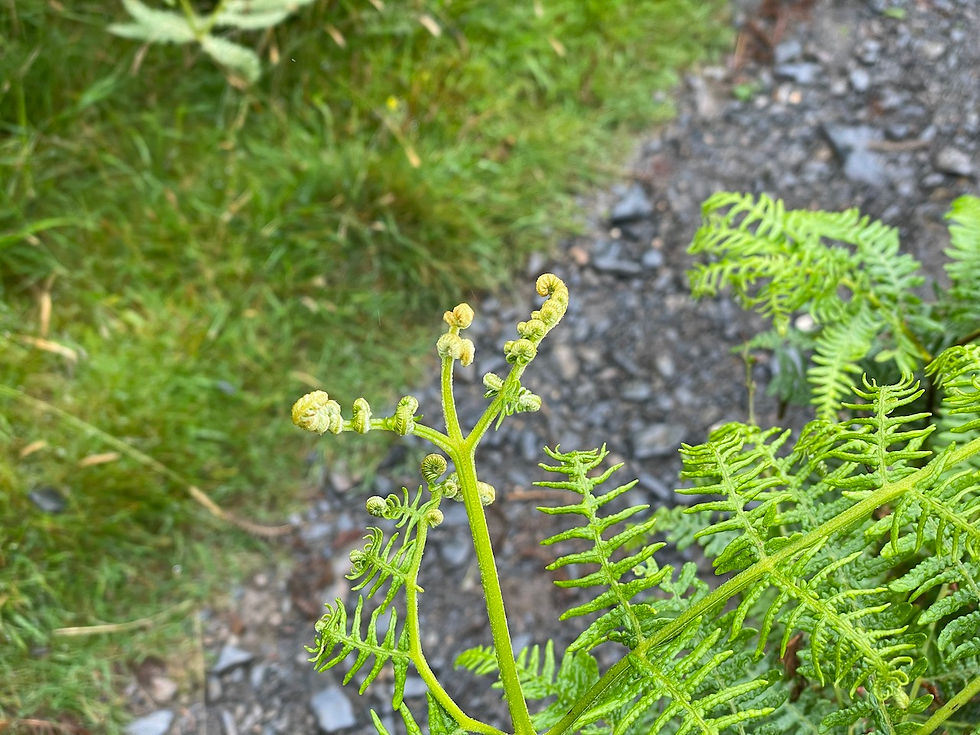
A bracken crosier is the tightly curled, emerging young frond of a bracken fern in springtime. The term "crosier" comes from its resemblance to a bishop's curved pastoral staff, or a shepherd's crook. These young shoots are also commonly referred to as "fiddleheads" because their coiled shape resembles the scroll on the end of a violin or fiddle.

The Lake District has a significant issue with extensive bracken coverage that many consider an infestation, or even a plague. An estimated 35,000 acres (6%) of the Lake District National Park is covered by the fern. I know that I have plenty, but the National Park around me has tons more.
Milk as Messenger
A very unsettling discovery has been the detection of ptaquiloside in cow’s milk. A study in the food chemistry literature detected ptaquiloside in milk from cows grazing bracken-infested pastures.[ix] Follow-up work on cattle has explored the fate of ptaquiloside in the animal and has reinforced the plausibility of excretion into milk.[x]
The amounts detected are small. However, ptaquiloside does not act like a conventional poison. It does not announce itself with nausea or pain. Its most troubling effects are slow and cumulative, because they arise from DNA damage and imperfect repair rather than from immediate toxicity.[xi]

Milk matters because it is consumed by calves at a critical stage of development, and by people who may have no awareness of the landscape chemistry behind it. It also matters because it creates a bridge between land management and dietary exposure, a connection that modern life makes easy to forget.
A Silent Question
Remember 1962’s Silent Spring by Rachel Carson?[xii] The publication that few believed at the time but is now recognised as one of the most influential books of the modern era. Carson’s research was prompted by a letter written in January 1958 by her friend, Olga Owens Huckins, to The Boston Herald. The letter described the deaths of birds around Huckins’ property in Duxbury, Massachusetts, caused by aerial spraying of DDT to kill mosquitoes. Unlike DDT, ptaquiloside is not manmade but is certainly ignored by many. Let me hope there is not another Silent Spring moment taking shape.

For reference, DDT (dichlorodiphenyltrichloroethane) is a synthetic organochlorine insecticide, famous for its widespread use after World War II to control disease-carrying insects and agricultural pests but later banned in many countries because of severe environmental persistence, bioaccumulation, and harm to wildlife. It is a persistent organic pollutant that breaks down slowly and builds up in food chains. This impacts ecosystems and potentially human health and led to DDT’s restriction under the Stockholm Convention in 2001.
Below Ground
Soils are alive. A single teaspoon of healthy soil contains a mind-boggling diversity of life, often housing tens of thousands of different species (e.g., bacteria, fungi, protozoa, nematodes) and billions of individual organisms, far outnumbering people on Earth. There are so many species in soil that just a quarter of a teaspoon can hold a total taxa load of up to 50,000 species. These species are hard at work cycling nutrients, filtering water, and supporting plant life.

Experimental work has shown that ptaquiloside can have genotoxic activity and can inhibit soil respiration in laboratory assays.[xiii] This does not mean that soils beneath bracken are dead. It does suggest that the chemistry of bracken can influence the biology of soil, in ways that may affect how ecosystems function.
This may help explain why bracken can be such an effective competitor. It does not merely shade out other plants. It brings a chemistry that interacts with the ecosystem below ground.
Unseen Harm
Wild animals and some livestock share the same landscapes as bracken, but their exposure is hard to measure.
Many pathways are plausible. Deer and other browsers may eat young shoots. Small mammals ingest contaminated plants and soil. Birds forage among the litter. Aquatic organisms may be exposed through runoff.[xiv] The difficulty is not imagining exposure but measuring its long-term consequences in free-living populations.

Some of the most concrete wildlife-relevant evidence comes from environmental fate work. Studies have identified ptaquiloside and related bracken toxins in surface waters and examined how stable they are once they arrive there.[xv] The authors concluded that previous predictions of the environmental impact of bracken were most likely underestimated.
Then there are spores. Ptaquiloside has been detected in bracken spores, which adds another plausible source of exposure, even if spore contribution, when compared with water and grazing, remains uncertain.[xvi]
It appears that wildlife may experience a burden that is real but poorly recorded.
Living with Uncertainty
When discussion turns to people, the tone often shifts. Mankind looks for certainty. There is a need for clear thresholds and definitive answers. Ptaquiloside does not offer these easily.
In parts of the world where bracken has been eaten traditionally, especially in East Asia, studies have discussed risk reduction approaches for ptaquiloside in edible bracken, including preparation methods that can reduce toxin levels.[xvii] Epidemiological studies in regions with bracken exposure have reported associations with gastric cancer, although such studies inevitably face confounding and measurement limitations.[xviii]
A broader review of bracken and human carcinogenesis summarised the evidence base and argued for biological plausibility.[xix] Among many statements, the authors said as follows:
“Studies reveal that the mere presence of bracken swards represents a greater risk to die of gastric adenocarcinoma for people who live more than 20 years in such areas or are exposed in childhood.”

A bracken sward is a dense, extensive area of land that has become dominated by the bracken fern. It describes an area where bracken has outcompeted and replaced most other ground flora.
In settings where bracken is not eaten, indirect exposure can be a concern. Milk is one route, drinking water is another.[xx] UK advisory and regulatory background papers have explicitly discussed bracken and ptaquiloside in relation to public exposure, including drinking water pathways.[xxi]
This does not mean harm is inevitable. It means there is some uncertainty. Human epidemiology struggles with slow, low-level exposures that vary across landscapes and behaviours. However, the absence of proof is not proof of absence.
Nobody Owns This
Ptaquiloside lacks drama. It does not kill suddenly. It does not cause mass die-offs. It does not produce immediate symptoms. It comes from a native plant rather than a factory. Certainly, veterinary medicine recognises bracken toxicity clearly.[xxii] Environmental chemistry has shown mobility and persistence. Water risk assessments acknowledge plausible exposure routes.[xxiii] Yet with all these disciplines, ptaquiloside sits awkwardly between them. One discipline passes the problem to another, and no decisions are made.
Why Bracken Wins
Indirectly, bracken does win, although the benefit is not the chemical itself so much as what it enables.
By deterring grazing and suppressing biological attack, ptaquiloside helps bracken dominate.[xxiv] That dominance can create dense stands that stabilise soil on slopes and provide cover for some wildlife. Bracken also forms part of habitat mosaics in some landscapes.

But when bracken becomes dominant, diversity often falls and grazing value declines. Bracken expansion can also increase the loading of ptaquiloside in soils and waters simply by increasing the amount of plant material present.[xxv]
Consequently, ptaquiloside is both a defence and, on a larger scale, a landscape influence.
Seeing Clearly
None of this calls for panic, but for attention.
Bracken is a powerful plant with a powerful chemistry. That chemistry evolved for good reasons, but it now operates at a scale shaped by human land use, altered grazing, and climate patterns that intensify heavy rainfall events and runoff.
Understanding ptaquiloside means accepting a slightly less romantic view of the countryside. Rain becomes a carrier.[xxvi] Milk becomes a messenger.[xxvii] Soil becomes an archive.[xxviii]
The hills will still rustle in summer. Bracken will still glow bronze in autumn. But once it is known what can move with the rain beneath those fronds, it becomes harder to see it as simple scenery.
Not a Contact Hazard
Despite ptaquiloside being a well-established genotoxic carcinogen when ingested, there is no evidence that it is absorbed to a biologically meaningful extent through intact skin, nor that inhalation constitutes a significant exposure pathway under normal environmental or occupational conditions. Experimental, veterinary, and regulatory assessments consistently identify oral ingestion[xxix] as the relevant route of concern, with no dermal or inhalation exposure limits proposed or discussed.[xxx]
Accordingly, no jurisdiction mandates personal protective equipment specifically to mitigate ptaquiloside exposure during bracken management or handling. Despite this, I wear a facemask and goggles when brush-cutting bracken mid-year. Where gloves, eye protection, or respiratory protection are recommended, this is in relation to physical injury, ticks, mechanical disturbance, or herbicide application, rather than bracken chemistry itself. This distinction is important, as it reinforces that ptaquiloside is best understood as a landscape-scale ingestion hazard, for which avoidance and source control are more appropriate risk-management strategies than personal protective equipment.
This said, care must be taken to avoid the leaching of ptaquiloside from cut ferns to aquifers and elsewhere. Appropriate precautionary measures must be taken to protect staff from exposure to bracken dust.[xxxi]
Walking Through It
For most people, contact with bracken happens not as a farmer or a scientist, but as a walker. Bracken lines paths, spills onto rights of way, and often forces detours where trails narrow or vanish entirely. In summer, it brushes bare legs and arms. In autumn, it collapses across tracks, hiding what lies beneath.

It is difficult to be accurate when quantifying the number of upland walkers in the Lake District, save to say it is plenty. There is no exact, real-time count, but millions visit the Lake District annually for walking, with estimates suggesting around four million people walk an average of six kilometres each year, causing significant footpath use and erosion on popular routes such as the Ullswater Way (70,000 users annually) and Scafell Pike. While some areas are quieter, major fells see heavy traffic, highlighting the huge, though unquantified, number of upland walkers enjoying the park's extensive trails and 214 Wainwright fells. Key data suggest that the National Park receives approximately 15.8 million visitors annually, many of whom walk. That is a lot of people. Try driving between Ambleside and Windermere on a UK bank holiday, and you will see precisely what I mean.
For upland walkers, the question is not whether bracken exists, but whether its chemistry matters at the scale of ordinary human experience.
Most of the time, the risk from ptaquiloside is likely to be low. But low does not mean zero.
Brushing Past
There is currently no strong evidence that brief skin contact with bracken causes harm. Ptaquiloside is not readily absorbed through intact skin, and casual brushing against fronds is not considered a meaningful exposure route. Regulatory reviews and toxicological assessments have focused instead on ingestion rather than dermal contact.
That said, bracken sap and fine plant debris can be irritating, and bracken stands can harbour ticks - I know that to my cost - which introduce a separate and well-established health risk unrelated to ptaquiloside. From a practical perspective, long trousers and long sleeves are sensible in dense bracken, but not because of cancer risk.
Breathing It In
A more nuanced question concerns inhalation. Bracken produces vast quantities of spores, released in late summer. Ptaquiloside has been detected in bracken spores collected in Britain.[xxxii]
What remains unclear is how much this contributes to real-world exposure. The concentrations involved are likely to be low, and inhalation exposure has not been shown conclusively to cause harm in walkers. Nevertheless, this pathway has been considered plausible enough to warrant mention in scientific and advisory literature, particularly for occupational exposure among those who cut or disturb bracken repeatedly.[xxxiii]
For walkers passing through bracken occasionally, inhalation is unlikely to be significant. For those who regularly cut paths, roll bracken, or work within dense stands, especially without respiratory protection, cumulative exposure becomes more relevant. It is no wonder that I wear gloves and goggles when working in bracken.
Water Matters Most
Perhaps the most important consideration for walkers lies not in the plant itself, but in water.

Upland walking culture often includes drinking from streams, springs, or hill wells, particularly in remote areas. In bracken-dominated catchments, this practice warrants reconsideration. Studies have shown that ptaquiloside can leach into groundwater and surface waters in such landscapes[xxxiv], and it has been detected in a private water well downslope of bracken stands.
This does not mean that every upland stream is contaminated, or that a single drink poses danger. It does mean that untreated water in bracken-rich areas cannot be assumed to be chemically neutral simply because it looks clear and tastes clean.
Public health and water quality reviews in the UK have explicitly identified private and informal water supplies as a potential vulnerability regarding ptaquiloside.[xxxv] For walkers, the implication is simple. Treating water by filtration and boiling remains good practice, not only for microbes but for landscape-derived chemicals whose presence is invisible.
When Exposure Repeats
Wild camping and foraging introduce longer durations of exposure. Sleeping among bracken, cooking near it, or repeatedly handling it during camp setup increases contact time. While there is no evidence that such activities are dangerous in themselves, they move exposure closer to the scenarios that concern toxicologists, which involve repetition rather than one-off encounters.

Foraging deserves particular caution. Eating bracken shoots, even experimentally, carries a known risk because ptaquiloside is present at high levels in young fronds.[xxxvi] This is one area where the science is clear enough to support firm advice. Bracken is not a benign wild food. I well remember, during my former military survival training, being taught that bracken was a plant I could eat. No longer.
Proportion Matters
The key point for walkers is not fear, but proportion.
Ptaquiloside is not a hazard that announces itself during a day on the hill. It does not produce immediate symptoms, and it does not turn a walk into a gamble. Its significance lies in patterns of exposure, particularly repeated ingestion over time, whether through diet or water.
Understanding this allows walkers to make calm, informed choices. Wear sensible clothing. Treat water. Avoid foraging bracken. Be aware that landscapes have chemistry as well as beauty.
Walking does not become less enriching because of this knowledge. Walking, if you are me, is wonderful.
***
Hashtags
References
[i] Ojika M, Wakamatsu K, Niwa H, Yamada K. Ptaquiloside, a potent carcinogen isolated from bracken fern pteridiumaquilinum var. latiusculum: structure elucidation based on chemical and spectral evidence, and reactions with amino acids, nucleosides, and nucleotides. Tetrahedron. 1987 Jan 1;43(22):5261-74.
[ii] Kushida T, Uesugi M, Sugiura Y, Kigoshi H, Tanaka H, Hirokawa J, Ojika M, Yamada K. DNA damage by ptaquiloside, a potent bracken carcinogen: Detection of selective strand breaks and identification of DNA cleavage products. Journal of the American Chemical Society. 1994 Jan;116(2):479-86.
[iii] Potter DM, Baird MS. Carcinogenic effects of ptaquiloside in bracken fern and related compounds. British Journal of Cancer. 2000 Oct;83(7):914-20.
[iv] Smith BL. Bracken fern (genus Pteridium) toxicity-a global problem. In Poisonous plants and related toxins 2004 (pp. 227-240). Wallingford UK: CABI Publishing.
[v] Rasmussen LH, Hansen HCB, Lauren DR. Sorption, degradation and mobility of ptaquiloside in soil. Chemosphere. 2005;58:823–35.
[vi] Ramwell CT, van Beinum W, Rowbotham A, Parry H, Parsons S, Luo W, Evans G. Ptaquiloside & other bracken toxins: A preliminary risk assessment. Food and Environment Research Agency, Sand Hutton, York, UK. 2010 May 28.
[vii] Wu JS, Clauson-Kaas F, Lindqvist DN, Rasmussen LH, Strobel BW, Hansen HC. Does the natural carcinogen ptaquiloside degrade readily in groundwater? Environmental Sciences Europe. 2021 Dec;33(1):24.
[viii] O’Connor PJ, Alonso-Amelot ME, Roberts SA, Povey AC. The role of bracken fern illudanes in bracken fern-induced toxicities. Mutation Research/Reviews in Mutation Research. 2019 Oct 1;782:108276.
[ix] Virgilio A, Sinisi A, Russo V, Gerardo S, Santoro A, Galeone A, Taglialatela-Scafati O, Roperto F. Ptaquiloside, the major carcinogen of bracken fern, in the pooled raw milk of healthy sheep and goats: an underestimated, global concern of food safety. Journal of Agricultural and Food Chemistry. 2015 May 20;63(19):4886-92.
[x] Aranha PC, Rasmussen LH, Wolf-Jäckel GA, Jensen HM, Hansen HC, Friis C. Fate of ptaquiloside - a bracken fern toxin - in cattle. PLoS One. 2019 Jun 21;14(6):e0218628.
[xi] Keskin F, Noone H, Dickman MJ, Allen E, Mulcrone WD, Rasmussen LH, Bruun Hansen HC, O’Connor PJ, Povey AC, Margison GP, Williams DM. Bracken Fern Carcinogen, Ptaquiloside, Forms a Guanine O 6-Adduct in DNA. Journal of Agricultural and Food Chemistry. 2025 Jan 7;73(2):1053-61.
[xii] Carson R. Silent Spring. Publ. Penguin Classics. 28 September 2000. ISBN 978-0141184944
[xiii] Schmidt B, Rasmussen LH, Svendsen GW, Ingerslev F, Hansen HC. Genotoxic activity and inhibition of soil respiration by ptaquiloside, a bracken fern carcinogen. Environmental toxicology and chemistry. 2005 Nov 1;24(11):2751-6.
[xiv] García-Jorgensen DB, Holbak M, Hansen HC, Abrahamsen P, Diamantopoulos E. Modeling the environmental fate of bracken toxin ptaquiloside: Production, release and transport in the rhizosphere. Science of the Total Environment. 2024 Apr 15;921:170658.
[xv] Kisielius V, Drejer M, Dornhoff JK, Mrkajic NS, Lindqvist DN, Hansen HC, Rasmussen LH. Occurrence and stability of ptesculentoside, caudatoside and ptaquiloside in surface waters. Environmental Science: Processes & Impacts. 2022;24(2):277-89.
[xvi] Rasmussen LH, Schmidt B, Sheffield E. Ptaquiloside in bracken spores from Britain. Chemosphere. 2013 Mar 1;90(10):2539-41.
[xvii] Kim MK, Kang JS, Kundu A, Kim HS, Lee BM. Risk assessment and risk reduction of ptaquiloside in bracken fern. Toxics. 2023 Jan 24;11(2):115.
[xviii] Alonso‐Amelot ME, Avendaño M. Possible association between gastric cancer and bracken fern in Venezuela: an epidemiologic study. International Journal of Cancer. 2001 Jan 15;91(2):252-9.
[xix] Alonso-Amelot ME, Avendaño M. Human carcinogenesis and bracken fern: a review of the evidence. Current Medicinal Chemistry. 2002 Mar 1;9(6):675-86.
[xx] Skrbic N, Pedersen AK, Christensen SC, Hansen HC, Rasmussen LH. A novel method for determination of the natural toxin ptaquiloside in ground and drinking water. Water. 2020 Oct 13;12(10):2852.
[xxi] Committee on Toxicity. Bracken and ptaquiloside background paper. UK COT; 2008. See https://cot.food.gov.uk/sites/default/files/cot/tox200820.pdf. Accessed 3 January 2026
[xxii] Bates N. Bracken poisoning. Livestock. 2023 May 2;28(3):100-5.
[xxiii] Clauson-Kaas F, Ramwell C, Hansen HC, Strobel BW. Ptaquiloside from bracken in stream water at base flow and during storm events. Water research. 2016 Dec 1;106:155-62.
[xxiv] Page CN. The history and spread of bracken in Britain. Proceedings of the Royal Society of Edinburgh, Section B: Biological Sciences. 1982 Jan;81(1-2):3-10.
[xxv] Ovesen RG, Rasmussen LH, Hansen HC. Degradation kinetics of ptaquiloside in soil and soil solution. Environmental Toxicology and Chemistry. 2008 Feb 1;27(2):252-9.
[xxvi] Skourti-Stathaki E, Clauson-Kaas F, Brandt KK, Rasmussen LH, Hansen HC. Dissipation of pterosin B in acid soils–tracking the fate of the bracken fern carcinogen ptaquiloside. Chemosphere. 2016 Dec 1;165:453-9.
[xxvii] Alonso-Amelot ME, Castillo U, Smith BL, Lauren DR. Bracken ptaquiloside in milk. Nature. 1996 Aug 15;382(6592):587.
[xxviii] Rasmussen LH, Kroghsbo S, Frisvad JC, Hansen HC. Occurrence of the carcinogenic Bracken constituent ptaquiloside in fronds, topsoils and organic soil layers in Denmark. Chemosphere. 2003 Apr 1;51(2):117-27.
[xxix] Yamada K, Ojika M, Kigoshi H. Ptaquiloside, the major toxin of bracken, and related terpene glycosides: chemistry, biology and ecology. Natural product reports. 2007;24(4):798-813.
[xxx] Rasmussen LH. Presence of the carcinogen ptaquiloside in fern-based food products and traditional medicine: Four cases of human exposure. Current Research in Food Science. 2021 Jan 1;4:557-64.
[xxxi] Rasmussen LH, Donnelly E, Strobel BW, Holm PE, Hansen HC. Land management of bracken needs to account for bracken carcinogens–A case study from Britain. Journal of environmental management. 2015 Mar 15;151:258-66.
[xxxii] Lacey ME, McCartney HA. Measurement of airborne concentrations of spores of bracken (Pteridium aquilinum). Grana. 1994 Apr 1;33(2):91-3.
[xxxiii] Evans IA. Bracken carcinogenicity. Reviews on Environmental Health. 1987 Jul;7(3-4):161-200.
[xxxiv] Clauson‐Kaas F, Jensen PH, Jacobsen OS, Juhler RK, Hansen HC. The naturally occurring carcinogen ptaquiloside is present in groundwater below bracken vegetation. Environmental toxicology and chemistry. 2014 May 1;33(5):1030-4.
[xxxv] Prakash AS, Pereira TN, Smith BL, Shaw G, Seawright AA. Mechanism of bracken fern carcinogenesis: Evidence for H‐ras activation via initial adenine alkylation by ptaquiloside. Natural Toxins. 1996 Sep;4(5):221-7.
[xxxvi] Shaw H. How to eat bracken fern safely. 28 April 2016. See https://honest-food.net/bracken-fern-edible/#:~:text=Note%20that%20I%20say%20“close,famous%20Korean%20dishes%20there%20is. Accessed 4 January 2026.

Comments